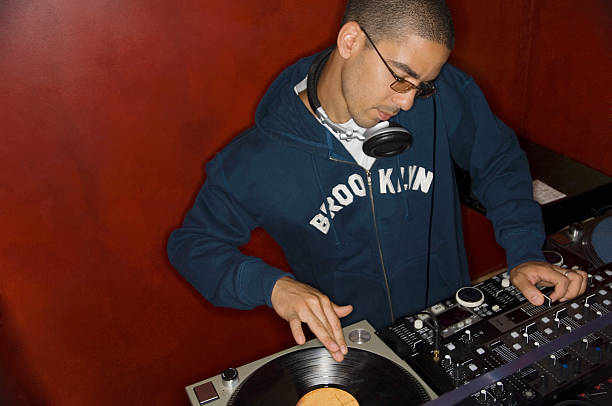


You know that moment when you’re at a pregame or a small club set, and someone hands you a USB stick or points to a laptop and asks you to pull up a track you’ve never heard? You fumble through a folder labeled “Random Edits,” the crowd is waiting, and suddenly the Wi-Fi drops out on your cloud library. You spiral. The beat stops. Your rep takes a hit. This is the Cloud Library Access Fail—a real, sweaty-palm nightmare for any DJ who relies on streaming services or cloud storage instead of solid, local files and, more importantly, a deep understanding of the language behind the decks.
In the digital age, DJs love the convenience of having millions of tracks at their fingertips. Services like Beatport LINK, SoundCloud Go+, and TIDAL let you stream entire catalogs without downloading a thing. It sounds perfect until you walk into a basement venue in Berlin or a rooftop party in Tokyo where the signal is weaker than a basement Wi-Fi router. Suddenly, that “infinite library” is just a spinning wheel of death. You’re stuck. The fix is not just better internet; it’s better preparation and knowing the DJ lingo that lets you pivot like a pro.
Let’s talk about what the Cloud Library Access Fail teaches us about the art of DJing. The real fails happen when a DJ doesn’t have the vocabulary to describe what they need, or the shorthand to communicate with a promoter, an engineer, or another DJ when things go sideways. DJ Lingo: Speak The Language isn’t just about showing off that you know what a “drop” is or how to “phrase” a mix. It’s about survival. When your cloud library fails, you need to know how to ask for a “master key” of a track, how to find the “cue points” on a borrowed USB, or how to quickly explain to the sound guy that you need to “route the booth monitor” differently. Without that lexicon, you’re not just a DJ without music; you’re a DJ without a plan.
Think about the pioneers who built this culture. Larry Levan at the Paradise Garage didn’t have cloud libraries or even a laptop. He had crates of vinyl, a razor blade for edits, and a deep vocabulary of rhythm and energy. Frankie Knuckles understood the spiritual language of the dance floor. Wendy Hunt and other trailblazers used terms like “the wheel,” “backspinning,” and “riding the fader” to create seamless journeys. They couldn’t fail because their library was physically with them, and their ability to read a room relied on instinct and shared terminology, not a streaming subscription.
So how do you avoid the Cloud Library Access Fail? First, always carry at least 50 to 100 fully downloaded, curated tracks on a USB stick or an SD card. Yes, even if you’re a streaming-first DJ. Think of it as your emergency chore wheel—boring but life-saving. Second, learn the real digital culture shorthand. Know the difference between a “key lock” and a “master tempo.” Understand what “beatgridding” does and why it matters when you’re playing on a club’s CDJ. Learn to ask for “a 4-deck setup” or “an isolated monitor mix” without sounding like you’re reading a script. This language is your backup battery.
When the cloud fails, you can still win the night. You can say, “Alright, I’m going to go old school. I’m going to work transitions off the phrase length, and I’ll use the echo out on the mixer to bridge the gap.” That confidence comes from knowing the terminology. It’s the difference between freezing and pivoting. In a scene where every second counts, being able to speak the language of the booth—whether it’s “tighten the bass,” “roll off the highs,” or “give me a long fade on track four”—keeps you in control.
The Cloud Library Access Fail is a rite of passage. It happens to everyone. But the ones who bounce back are the ones who already had the tools—not just in their hard drive, but in their head. They know that DJ Lingo is more than slang; it’s a cultural map. It tells you how to navigate a broken system, how to connect with a crowd, and how to keep the party alive when technology ghosts you. So before you buy another subscription, invest in your vocabulary. Speak the language. Because when the cloud goes dark, the only thing that saves you is your own voice behind the decks.