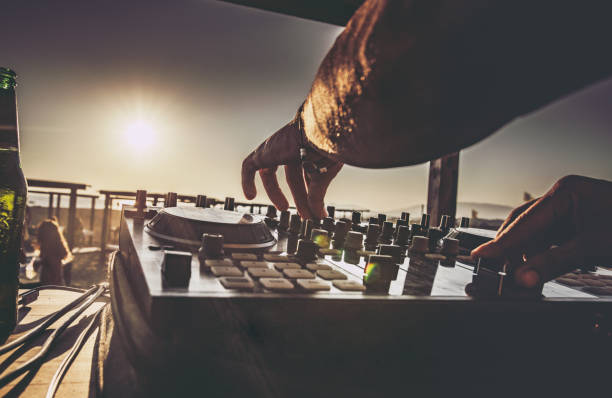

So you’ve decided to step behind the decks. Maybe you’ve been obsessively watching DJ sets on YouTube, or you’ve finally gotten tired of waiting for your friends to take requests. Either way, welcome to the club. But before you start thinking about turntables, cue points, or even what to wear, there’s one thing that separates a good DJ from a train-wreck who clears the floor: your digital library. And not just any library, but one organized by vibe.
Here’s the deal. When you’re first starting out, it’s easy to fall into the trap of collecting every track you vaguely like. You’ll download a hundred house bangers, a handful of afrobeat cuts, some old-school hip-hop, and maybe a few random remixes you found on SoundCloud. Then you open your DJ software, scroll through a chaotic mess of track names, and suddenly you’re sweating through a four-hour set because you have no idea what to play next. That’s the opposite of the art of organizing by vibe.
Organizing by vibe means you stop sorting by genre or BPM alone. Instead, you think in terms of energy, texture, and emotional landscape. A deep, moody techno track might technically be 128 BPM, but so is a funky disco house tune. They do not belong in the same folder, and if you throw them next to each other, you’ll confuse the dance floor. The key is to create folders or smart playlists that capture how a track feels—not just how fast it is.
Start with broad categories. Call them something like “Opening Vibes,” “Groove & Roll,” “Bangers Only,” “Late-Night Chills,” and “Set Closers.” Within each, you’ll add tracks that share a similar energy arc. “Opening Vibes” might be warm, housey, with a bit of shuffle, perfect for when people are still walking in. “Bangers Only” is where you drop the peak-time tracks that make people lose their minds. “Late-Night Chills” might be deeper, minimal, or even a little weird—perfect for 3 a.m. when the lights are low and the crowd is in a trance. This system lets you navigate your library without thinking. You just grab the vibe folder that matches the current moment.
But here’s where the digital library nerds out. Every track you download should get tagged with more than just genre. Use the comments or metadata fields to note specific instruments, key moments, or crowd reactions you’ve observed. For example, you might tag a track as “saxophone drop” or “glassy arpeggios” or “build-up into silence.” This is your secret weapon. When you’re live and the energy is shifting, you can quickly search for a track that has a specific emotional texture, rather than just guessing.
Don’t sleep on BPM ranges, but also don’t rely on them. A track at 120 BPM can be both a sunrise sizzler and a peak-time stomper depending on its arrangement. That’s why vibe organizing asks you to think like a storyteller. You want to take your audience on a journey, not a math test. The best DJs—the ones who carry on the legacy of Larry Levan, Frankie Knuckles, and Wendy Hunt—didn’t just play records. They read the room. They understood that a track’s emotional weight matters more than its tempo. When you build your digital library with that mindset, you’re already ahead of 90% of beginners.
Another pro tip: don’t hoard 10,000 tracks you’ve never heard. Quality over quantity. Start with 200–300 tracks you truly know inside and out. Listen to them in your car, while you’re cooking, or on your morning walk. Learn their peaks, their breakdowns, and their quiet moments. Then organize them into your vibe folders. As you play them out, you’ll naturally start to see connections—tracks that blend beautifully, tracks that create tension, tracks that feel like a reset. Those connections become your signature.
When you’re building your digital library, use tools like Rekordbox, Serato, or even iTunes smart playlists to speed things up. But never let the software do the heavy lifting for your intuition. The vibe is yours to curate. It’s personal. And it’s the one thing no algorithm can replicate.
Finally, remember that organizing by vibe isn’t static. Your library will evolve as you do. A track you thought was a “Banger” might eventually feel more like a “Groove & Roll” after you’ve heard it a hundred times. That’s fine. Move it. The art is in the constant refinement. Just like the legendary DJs before you, you’re not just playing music—you’re sculpting energy, one vibe at a time.
So start small. Listen deep. Organize by feeling. And trust that when you step up to those decks, your digital library will speak for you.