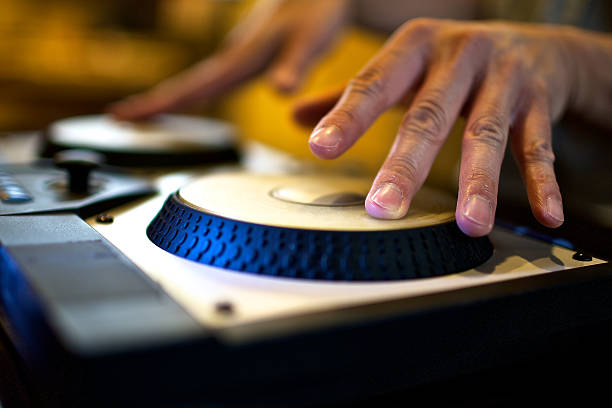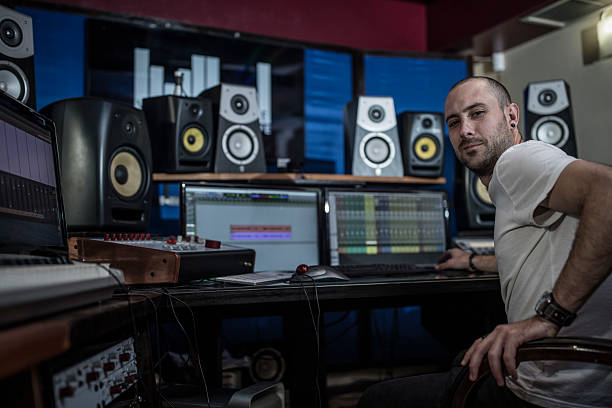


You’ve got your USB sticks loaded, your headphones coiled just right, and that fresh pair of kicks ready to grip the booth floor. But before you touch the faders or drop that first track, there’s one thing separating a legendary set from a feedback-filled trainwreck: your pre-shift EQ checks. In the world of advanced EQ and filtering, this is where the magic either happens or falls apart. Mastering the mix doesn’t start when the crowd is already bouncing—it starts the moment you walk into the booth, headphones on, ears open, and a deliberate checklist running through your head.
Let’s get real for a second. The DJ booth is a chaotic environment even before you hit play. Sound systems vary wildly from club to club, monitor placement is often cursed by physics and budget constraints, and the previous DJ might have left the mixer’s EQ section in a state of absolute disarray. You know the scene: all the lows cranked to +6, the mids scooped out to oblivion, and the highs hissing like a angry teakettle. If you blindly start your set without resetting and testing, you’re not mastering the mix—you’re gambling with the room’s energy and your reputation.
So what does a proper pre-shift EQ check actually look like? First, kill the master output or cue up a track you know inside out. A track you’ve heard a thousand times on different systems—your reference track. This isn’t the time for a fresh unreleased tune you’re still feeling out. Choose something with clear, defined lows, present mids, and crisp highs. Think a classic house cut from Frankie Knuckles or a modern club weapon with a tight kick. Play it through the house system for fifteen seconds. Listen to how the low end behaves. Is it boomy? Flabby? Does the sub feel like it’s vibrating your soul or just rattling the windows? Adjust the mixer’s channel EQ and master EQ accordingly, but don’t touch the trim or gain until you’ve assessed the tonal balance first.
Now bring in the filtering. Advanced EQ and filtering isn’t just about cutting mud or taming harshness—it’s about sculpting the frequency spectrum to fit the room, the crowd, and your specific mixing style. During your pre-shift EQ check, sweep the high-pass filter on your channel. Notice where the kick drum starts to lose its punch. That’s your sweet spot for transitions. Flip on the low-pass filter and listen for the point where the highs vanish entirely. This knowledge becomes muscle memory during a live set, but you have to earn it before the first beat drops. A lot of DJs skip this step because they’re nervous or rushing to impress the promoter. Don’t be that DJ. The crowd can feel hesitation in the mix.
The legendary Larry Levan used to spend hours tweaking the Paradise Garage’s system before his sets, adjusting EQs like a surgeon to make sure every record hit with maximum emotional impact. Wendy Hunt, one of the unsung heroes of early club culture, famously said that a DJ’s relationship with EQ is the difference between playing records and conducting an experience. When you master your pre-shift checks, you’re channeling that same energy. You’re telling the room, “I respect this space, I respect the system, and I respect your ears.”
Don’t forget about the monitors either. You might think you’re hearing the mix perfectly, but if your monitors are feeding back or sitting at a weird frequency, you’ll compensate by boosting things that don’t need boosting. Walk around the booth. Put your head near the dancefloor side. Listen to what the audience is actually going to hear, not just what you hear in your cans. This is advanced filtering in practice, not theory.
Finally, lock in your EQ reset ritual before every single set, whether it’s a Tuesday night at a basement bar or main stage at a bucket-list festival like Movement or Glastonbury. The habits you build in low-stakes environments are what save you under pressure. Mastering the mix isn’t about being a hero in the moment—it’s about being prepared enough that the moment feels easy. Pre-shift EQ checks are your anchor. Do them right, and every transition, every filter sweep, every volume drop becomes intentional and powerful. Skip them, and you’re just hoping the sound guy is having a good day.
So before you play that first track, take sixty seconds to honor the craft. Reset the EQ. Sweep the filters. Trust your ears. Then drop the beat and let the mix speak for itself.