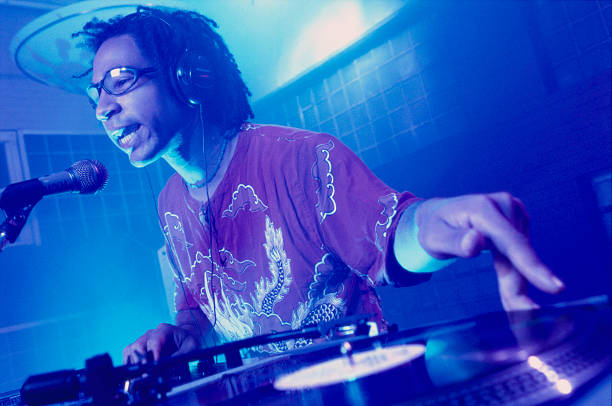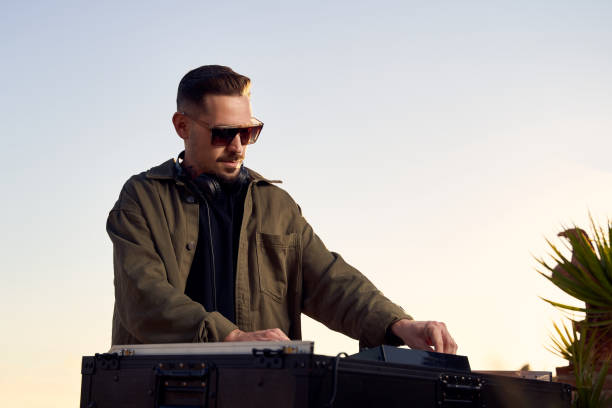

It’s 1:47 a.m., the floor is half-full, and your last transition landed like a lead balloon. You’ve got two choices: panic-scroll your crates or let the AI nudge you toward a track that matches the room’s actual energy. That’s the promise of AI in the booth—not a robot replacing your taste, but a real-time wingman that reads the crowd and whispers suggestions while you keep your hands on the decks.
The tech works by pulling in signals you already feel but can’t always quantify. Cameras and mics can estimate movement, noise, and chatter. Crowd-sourced check-ins, ticket scans, and even anonymized phone motion data can hint at a dip or spike. The AI cross-references that with your set history, track metadata, key, BPM, energy curves, and maybe live stem separation. Then it flags options: “Try this darker garage cut,” “Drop a vocal peak in four minutes,” “You’re drifting too hard—reset with something soulful.” It’s like having a second pair of ears that never gets tired, plus a memory that doesn’t care whether it’s 2 a.m. or 4 a.m. The best versions don’t just spit out a next track. They show why: energy score, key compatibility, vocal density, and risk level. You can set guardrails—no cheesy EDM drops, keep it deep and dubby, don’t repeat a vocalist. That makes the assist feel like crate digging with a supercharged memory.
For newer DJs, that’s a genuine cheat code. Learning to read a room takes years of bruising sets and awkward empty-floor moments. An AI assist can shorten that learning curve by showing patterns—when the crowd peaks, how long they’ll tolerate a build, which transitions actually keep feet moving. For traveling DJs, it’s even more useful. You land in a city you don’t know, with a crowd whose references are different from your hometown regulars. A well-trained model can help you avoid a total culture clash without turning your set into a generic Spotify playlist. It can also help with accessibility—DJs with hearing loss, fatigue, or ADHD can use visual and haptic cues to stay locked in.
But here’s the catch: crowd data is messy, and AI is only as good as its signals. A packed floor doesn’t always mean people are feeling it. Sometimes they’re just waiting for friends. Sometimes a noisy room is a social room, not a dancing room. Cameras and sensors also raise privacy questions—nobody wants a surveillance vibe in the club. And if every DJ leans on the same recommendation engine, sets start to sound samey. The algorithm chases the average, but great DJing is often about the weird left turn, the risky B-side, the track that shouldn’t work but does. There’s also the feedback-loop problem. If the AI learns from crowd reactions, it might push safe bangers because they reliably get cheers, nudging you away from the slow-burn tracks that build a night’s identity. And a model trained on festival data won’t understand a sweaty basement or a tiny listening bar.
So the move isn’t autopilot. It’s assisted intuition. Use AI like a wingman who’s great at stats but terrible at storytelling. Let it handle the grunt work—matching keys, tracking energy, pulling forgotten gems from your library, suggesting a transition when your brain is fried. Then you make the final call. If the AI says “go harder” and your gut says “give them a breath,” trust the gut. The booth is still a human space. The crowd wants to feel a person making decisions, not a dashboard executing a playlist.
The future of AI in the booth is probably hybrid: smarter crate digging, real-time crowd reads, live stem remixing, and personalized warm-up tools. But the DJs who thrive will be the ones who treat AI as a collaborator, not a crutch. Train it on your library, set boundaries, test it in low-stakes sets, and ignore it when it’s wrong. Keep consent and transparency in mind if you’re using crowd sensing. The tech can amplify your instincts, but it can’t replace the moment when you lock eyes with the floor and know exactly what they need. That’s still the job. AI just makes the guesswork a little less lonely.